Monetization Strategies for Your Application
1- Affiliate Program
Affiliate programs is about earning revenue by opening your users to other businesses through your app. encouraging your users to buy services or products you are providing, after the purchase the user can get a share of the revenue depending on the affiliate program scheme.
2- Complete Subscription
Complete subscription allows you to explore the app, but in this case application will be downloaded for free with a trial period for limited content. Once the trial period is expired the application will bb locked for use without subscription.
3- Donations
Another name is Crowdfunding. You ask the users who are using your app to donate to support you. Donations can come from users who are satisfied and happy to invest and support you and your app.
However, you can set up a crowdfunding before the app is there, to collect funds and be able to pay for app development and launch it.
Receiving donations can be done using Paypal, or any paying platform.
4- In-APP Advertising
on average people in USA spend more than 4 hours everyday using their smart phone, this means more than 4 days a month!
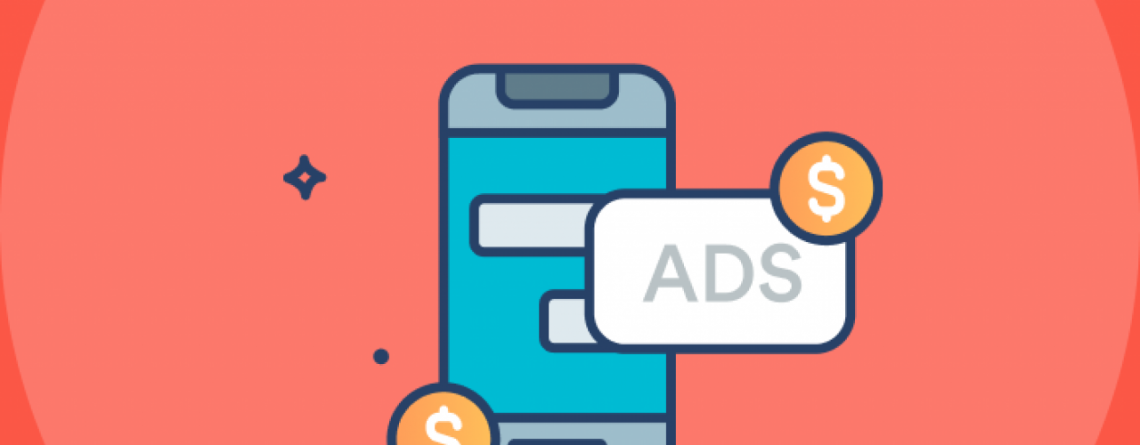
Therefore, if businesses want to be seen they must know where their audience is. This is why in-app advertising popularity is growing and why this is an attractive monetization strategy. Apps offer advertising space to businesses who are looking to gain visibility with the app’s user base.
There are five basic types:
- Rewarded ads
- Native ads
- Videos
- Banners
- Interstitials
5- In-App Purchases
In-App purchases usually come with free apps. A free app will have only certain features unlocked by default and allow you to use it with a limited potential. If you want to enjoy the app to its fullest potential, you will have to cash out. There are three general types of in-app purchases: consumables, non-consumables, and subscriptions (auto-renewable and non-renewing).
6- Paid Downloads
This is the most straightforward way of monetizing an app – requesting payment before download. However, even though this is the most obvious choice of a monetization strategy, it comes as no surprise that it is not the most popular one, moreover, it’s nowhere close to being that.
According to some statistics, just above 4% of android apps are paid for, whereas with iOS, this number is double but still at a measly 6.6%. So what should this information tell you? In the world of apps being counted by millions, it takes a lot of confidence in a service or a product to charge per download.
By asking for money from the get-go, you are making a promise that your app will not disappoint. As a result, some people could set their expectations high, resulting in frustration if they turn out to be wrong about your app.
On the plus side, you could be looking at a completely different scenario. The users paying for an app might invest a bit more time into considering their options and will likely be more satisfied with them, resulting in loyal customers.
The bottom line is that those satisfied with a paid app will likely stick to it and recommend it further, while those who do not like it will get more frustrated than they would be with a free app thinking that you owe them something since they paid for it. You have to believe in the quality and uniqueness of your product or rely on the loyalty of your audience (or both).
7- Sharing Economy Apps
Sharing economy apps are simply helping everyone prosper. From the app owners to the users on both sides, such asset-sharing, service-providing, and matchmaking apps connect people and help one party earn while helping the other party find a service provider.
To make such an app, one first has to have a lucrative idea. What is it that some people have plenty of and others may need? What is it that one person needs to have done and is looking for help doing it? Building an app based on this idea is the next step.
What you should be offering is a communication tool that can work the logistics perfectly and facilitate any transactions that need to occur (financial transaction, booking a service, booking accommodation, etc.). It should help clients state their requirements clearly and let service providers present what they are offering, as well as help the two sides connect.
The ideas are endless – there are apps providing rides from one place to another, delivery, accommodation, financial loans, car rentals, etc.
8- Sponsorships or Partnerships
This monetization strategy is based on businesses and apps helping one another reach audiences. Of course, not every app will be successful with this strategy, but with the right choice of a partner, it could bring great benefits.
The success will not only be recognized by virtue of the increased revenue but also by increased brand awareness. For this reason, a successful sponsorship or a partnership can do a lot for an app in the long run.
The partner you are looking for is relevant, has a large client base, and is reputable. The greater the client base is, the greater your visibility will be. Other businesses will apply the same criteria when looking for a partner, so now you not only know what you are seeking out but also what you have to work on.
Sponsorship entails that a business looks for an app that possibly has a similar target audience. Thus, they promote their business to the app’s client base, and in such a way increase their own client base. The “sponsoring” part is often reflected in special offers, coupons, and various other rewards offered by the business to the users of the app.